
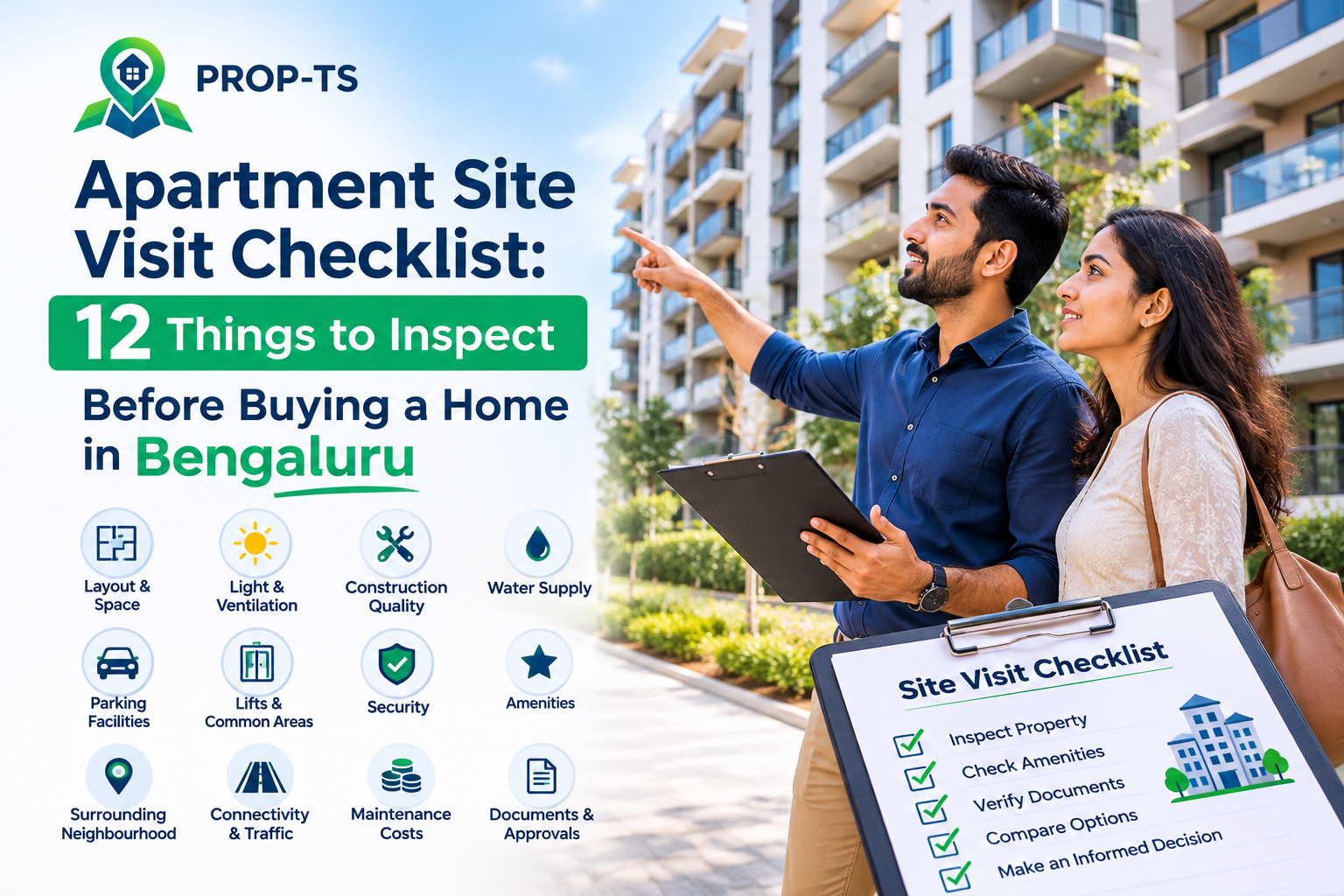
Apartment Site Visit Checklist: 12 Things to Inspect Before Buying a Home in Bengaluru
Searching for an apartment online is often the first step towards finding a new home. Photos, floor plans, property descriptions and amenities can help buyers shortlist properties.
However, an actual site visit is equally important.
Visiting an apartment allows you to understand the property's condition, layout, surroundings and everyday convenience. It can also help you identify things that may not be visible in online listings or marketing brochures.
Whether you are considering a newly launched project, an under-construction apartment or a ready-to-move property, here are 12 important things to inspect during a property site visit in Bengaluru.
1. Check the actual apartment layout
Start by understanding how the apartment is designed.
Observe:
- Bedroom sizes.
- Living and dining space.
- Kitchen layout.
- Bathroom positioning.
- Balcony dimensions.
- Storage possibilities.
Check whether the layout supports your everyday requirements.
Do not judge an apartment only by its total advertised area. Understand the carpet area and usable space.
2. Observe natural light and ventilation
Natural lighting and ventilation can make a significant difference to everyday comfort.
During the visit, check:
- How much daylight enters the rooms.
- Whether bedrooms have adequate windows.
- Cross-ventilation possibilities.
- Air circulation in the kitchen.
- Ventilation in bathrooms.
If possible, visit during daytime hours to understand the actual lighting conditions.
3. Inspect construction and finishing quality
Look carefully at the visible construction and finishing.
Check:
- Wall surfaces and paint.
- Flooring and tile alignment.
- Door and window fittings.
- Electrical switches.
- Plumbing fixtures.
- Balcony and bathroom waterproofing indicators.
For ready-to-move apartments, look for visible cracks, dampness, water stains or signs of repair.
For under-construction properties, compare the work with the specifications and commitments provided by the developer.
4. Evaluate water supply and drainage
Water availability is an important consideration for residential properties in Bengaluru.
Ask about:
- Main water supply arrangements.
- Borewell availability, if applicable.
- Cauvery water connection, where applicable.
- Water storage capacity.
- Water treatment facilities.
- Rainwater harvesting systems.
- Sewage treatment arrangements.
Also understand the property's water management and recurring maintenance arrangements.
5. Check parking facilities
If you own a vehicle or plan to purchase one, inspect the parking arrangements.
Look at:
- Allocated parking space.
- Vehicle entry and exit.
- Basement accessibility.
- Ramp design.
- Visitor parking.
- Two-wheeler parking.
Confirm the parking arrangements in the relevant property documents rather than relying only on verbal assurances.
6. Inspect lifts, corridors and common areas
The apartment itself is only one part of a residential community.
Check:
- Number and condition of lifts.
- Corridor maintenance.
- Staircase access.
- Emergency exits.
- Lighting in common areas.
- Accessibility for senior citizens.
- Overall cleanliness.
For larger apartment communities, also ask about lift maintenance and backup arrangements.
7. Understand security arrangements
Security should be evaluated as part of the overall residential environment.
Observe:
- Main entrance access.
- Security personnel.
- Visitor registration.
- CCTV coverage.
- Access control arrangements.
- Emergency response facilities.
Ask how security operations are managed and whether there are additional charges.
8. Examine the amenities actually available
Apartment brochures may show swimming pools, gyms, clubhouses, gardens and children's play areas.
During the site visit, understand which amenities are:
- Already completed.
- Currently operational.
- Still under construction.
- Planned for a later phase.
Also ask about usage restrictions, maintenance charges and access conditions.
9. Evaluate the surrounding neighbourhood
Step outside the apartment complex and explore the surrounding area.
Check the availability of:
- Grocery stores.
- Pharmacies.
- Hospitals and clinics.
- Schools.
- Restaurants.
- Public transport.
- Parks and recreational spaces.
Try to understand whether the location supports your everyday lifestyle.
10. Check road connectivity and traffic
Connectivity can influence both convenience and the long-term attractiveness of a residential location.
Consider:
- Access to major roads.
- Distance to employment hubs.
- Metro connectivity, where available.
- Bus and other public transport access.
- Peak-hour traffic.
- Road conditions during monsoon periods.
Do not rely entirely on estimated travel times provided in property advertisements.
Check the routes yourself and, where practical, visit during peak commuting hours.
11. Understand maintenance and recurring expenses
Before deciding, ask about the expected ongoing expenses.
These may include:
- Monthly maintenance.
- Sinking fund contributions.
- Common-area electricity.
- Water-related expenses.
- Facility maintenance.
- Parking-related charges, where applicable.
For resale properties, ask about any outstanding maintenance dues and pending repairs.
Understand the financial responsibilities before making a commitment.
12. Ask about documents and project status
A site visit should also include questions about the property's documentation.
Depending on the property type and stage of construction, ask about:
- Applicable RERA registration.
- Sanctioned building plans.
- Relevant approvals.
- Completion or occupancy documentation, where applicable.
- Ownership and title documents.
- Sale agreement.
- Possession commitments.
Documentation requirements can differ between new projects and resale properties. Obtain independent legal advice before proceeding.
Additional tip: Visit the property more than once
One visit may not reveal everything.
Consider visiting:
- During the morning to assess natural light.
- During the evening to understand traffic and neighborhood activity.
- During or after rainfall, if practical, to observe drainage and waterlogging conditions.
You may also benefit from speaking with existing residents or nearby shop owners.
Apartment Site Visit Checklist
Before leaving the property, make sure you have checked:
- Apartment layout and usable space.
- Natural light and ventilation.
- Construction and finishing quality.
- Water supply and drainage.
- Parking facilities.
- Lifts and common areas.
- Security arrangements.
- Available amenities.
- Nearby daily necessities.
- Road and transport connectivity.
- Maintenance expenses.
- Relevant approvals and documentation.
Take photographs and notes, with permission where required, so you can compare different properties later.
Final thoughts
An apartment may look attractive in photographs, but the actual property, its surroundings and its documentation deserve careful attention.
A proper site visit helps buyers understand what they are considering before making a financial commitment.
At PROP-TS, we believe that finding the right property starts with finding the right location.
Explore properties on the PROP-TS interactive map, discover property details and shortlist opportunities based on the locations that matter to you.
SEARCH BETTER. Discover Properties by Location.
Explore: https://map.prop-ts.com/
Disclaimer: This article provides general property-buying information and is not a substitute for professional legal, technical or financial inspection.
Explore property opportunities with PROP-TS.
Explore the property map