
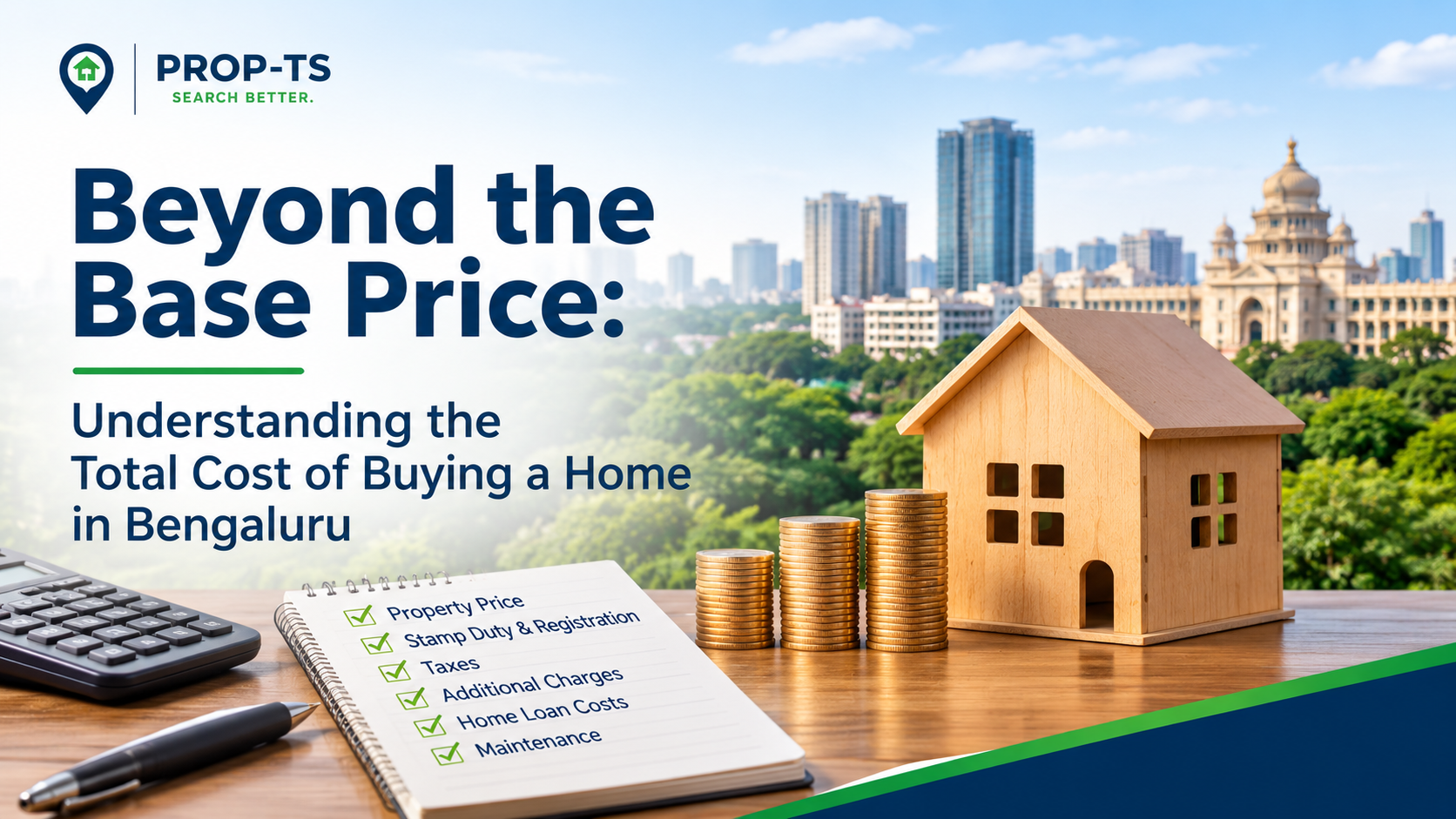
Beyond the Base Price: Understanding the Total Cost of Buying a Home in Bengaluru
Buying a home is one of the biggest financial decisions many people make. When browsing property listings, the advertised price often becomes the starting point for comparing options.
However, the advertised price may not represent the complete amount a buyer needs to budget for.
Several additional expenses can arise during the purchase process and after taking possession. Understanding these costs early can help buyers plan their finances, compare properties more accurately and avoid unexpected surprises.
Here are some important cost components to consider when purchasing a home in Bengaluru.
1. Understand the basic property price
The basic property price is generally the starting price quoted by the developer or seller.
For an apartment, this may be based on the saleable area or another pricing structure specified by the seller. Buyers should understand exactly what area measurement is being used and how the price has been calculated.
Ask for clarity on:
- The quoted property price
- The area considered for pricing
- The applicable rate per square foot
- Whether the price is negotiable
- What is included in the quoted amount
Comparing properties only by their advertised prices can be misleading if their area definitions and included features differ.
2. Consider stamp duty and registration charges
Property registration involves statutory charges payable to the relevant government authorities.
Stamp duty and registration fees are important components of the overall purchase budget. The applicable amounts can depend on factors such as property value, transaction details and prevailing government rules.
Before proceeding, verify the current charges through the appropriate Karnataka government registration resources or consult a qualified professional.
Do not rely solely on estimates provided in an informal discussion.
3. Check applicable taxes
Depending on the property type, transaction structure and construction status, applicable taxes may form part of the purchase cost.
For example, GST treatment can differ between under-construction and completed properties. A completed property sold after obtaining the relevant completion or occupancy documentation may be treated differently from an under-construction unit.
Buyers should ask for a clear written cost breakdown and confirm the applicable tax treatment with a qualified tax professional.
4. Look for additional developer or seller charges
Some property transactions may include charges beyond the basic property price.
Depending on the project and agreement, these may include:
- Parking charges
- Clubhouse or amenity-related charges
- Utility connection charges
- Infrastructure or development charges
- Maintenance deposits
- Corpus fund contributions
- Documentation or administrative charges
Not every project will have all these charges. Ask the developer or seller to identify each applicable amount and explain its purpose.
Request a written cost sheet before paying a booking amount.
5. Account for home loan expenses
If you are planning to finance the purchase through a home loan, consider the costs associated with the loan as well.
These may include:
- Loan processing fees
- Legal and technical evaluation charges
- Documentation charges
- Mortgage-related statutory charges, where applicable
- Insurance products offered or required as part of the loan arrangement
Also compare interest rates, repayment periods and the total interest payable over the loan tenure.
A lower monthly EMI does not necessarily mean a lower overall borrowing cost.
6. Plan for interiors and moving expenses
The purchase price is only one part of making a property ready for everyday living.
Depending on the condition of the property, buyers may need to budget for:
- Electrical and lighting work
- Kitchen fittings
- Wardrobes and storage
- Furniture and appliances
- Painting and minor repairs
- Internet and utility setup
- Packing and relocation
These expenses can vary significantly depending on the property's condition and the buyer's preferences.
For resale properties, inspect the condition of existing fittings and understand what is included in the sale.
7. Understand recurring maintenance expenses
After taking possession, homeowners may have recurring expenses.
For apartments, these can include monthly maintenance, sinking fund contributions, common-area expenses and other charges specified by the association or applicable agreements.
For independent homes, owners may need to budget separately for security, repairs, water supply, waste management and general upkeep.
Understand the expected recurring expenses before finalizing your purchase.
8. Compare properties using the complete cost
When comparing two homes, avoid looking only at the advertised price.
Prepare a simple comparison that includes:
- Basic property price
- Applicable statutory charges
- Taxes, where applicable
- Additional project or seller charges
- Loan-related costs
- Initial setup and interior expenses
- Expected recurring maintenance
This gives you a clearer picture of the financial commitment involved.
A practical checklist before booking
Before making a booking payment, ask for:
- A detailed written cost sheet.
- Clarity on the area and price calculation.
- Details of all additional charges.
- Applicable tax information.
- Registration and stamp duty estimates based on current rules.
- Home loan cost details, if financing is involved.
- Expected maintenance and recurring expenses.
Review the sale agreement and relevant documents carefully. Seek independent legal, tax or financial advice wherever necessary.
Final thoughts
The right property decision is not based on the advertised price alone. It involves understanding the complete financial commitment, both at the time of purchase and over the years that follow.
Taking time to understand the cost breakdown can help buyers compare options with greater clarity and plan their home purchase more confidently.
At PROP-TS, we believe informed property discovery begins with asking the right questions and exploring properties based on the locations that matter to you.
SEARCH BETTER. Discover Properties by Location.
Explore property opportunities at https://map.prop-ts.com/.
Explore property opportunities with PROP-TS.
Explore the property map